Why Your Smart Home Needs a Stronger Network
The Technology in Your Home Is Only as Good as the Infrastructure Behind It
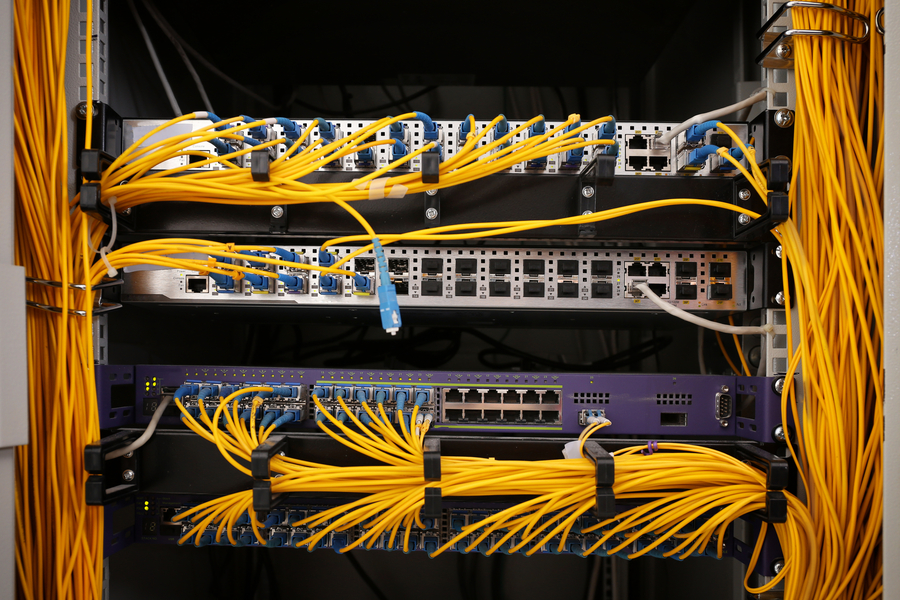
Most homeowners invest heavily in the technology they can see — the sleek displays, the speakers, the lighting that responds to a tap or a voice command. What often gets overlooked is the infrastructure that makes it all work. Your network is the foundation every connected device in your home depends on, and when it's not up to the task, even the best equipment underperforms. Let’s discuss why modern smart homes need more robust networks.
SEE ALSO: Fall in Love With Your Home Again
More Devices, More Demand
The average smart home today runs far more connected devices than most people realize. Streaming TVs, wireless speakers, smart thermostats, lighting systems, security cameras, video doorbells, tablets, phones — it adds up fast. Many homes are managing 30, 50, or even more devices competing for bandwidth at any given moment.
The router that came with your internet service wasn't designed for that. Consumer-grade equipment handles everyday browsing and app connections well enough, but it wasn't built to manage the constant, simultaneous demands of a fully integrated smart home. The result is congestion, which manifests as sluggish response times, dropped connections, and a system that feels unreliable even when the individual components are high-quality.
What Suffers When the Network Struggles
The symptoms show up across every part of the system. In the home theater, 4K and 8K streaming require consistent, high-bandwidth throughput. Buffering, compression artifacts, or a picture that never quite looks as sharp as it should aren't display problems; they're network problems.
Multi-room audio is just as sensitive. Dropouts between zones, audio that falls out of sync, or a stream that cuts out mid-song are classic signs of Wi-Fi dead zones or interference. The speakers may be excellent, but the network just isn't keeping up.
Home automation adds another layer. When a lighting scene hesitates, a lock doesn't respond on command, or a programmed routine fires late, it chips away at your confidence in the system. The technology feels less like a smart home and more like a frustrating one.
Security is where the stakes are highest. Cameras that drop offline or miss recording windows because the network can't sustain the data flow aren't doing their job, regardless of how capable the hardware is.
In every case, the devices aren't the problem; the foundation is.
What Professional-Grade Networks Do
A professionally designed network is an entirely different approach to how your home handles connectivity. Enterprise-class wireless access points are placed strategically throughout the property to eliminate dead zones and deliver consistent coverage in every room, on every floor, and out to the backyard. Where reliability matters most, wired connections provide a backbone that Wi-Fi simply can't match.
Network segmentation keeps smart home devices on their own dedicated path, separate from personal computers and phones. That separation improves both performance and security. Managed switches prioritize traffic intelligently, so a 4K stream doesn't compete with a security camera feed or a lighting command.
Get the Right Foundation for Your Home
Investing in quality audio, video, lighting, and automation deserves infrastructure that can support it. Installing great technology on a weak network is like putting high-end speakers in a room with poor acoustics — the potential is there, but the experience never quite delivers.
Whether you're building a new home, upgrading an existing system, or simply tired of a smart home that doesn't behave like one, the network is the right place to start. Getting it right from the beginning saves frustration down the road and makes every other part of the system perform the way it was designed to.
Ready to build a smarter foundation? Contact Custom Home Sound to start the conversation.