What Is a Video Wall and Why Might You Want One?
A Closer Look at Today's Display Options and How to Know if One Is Right for Your Space
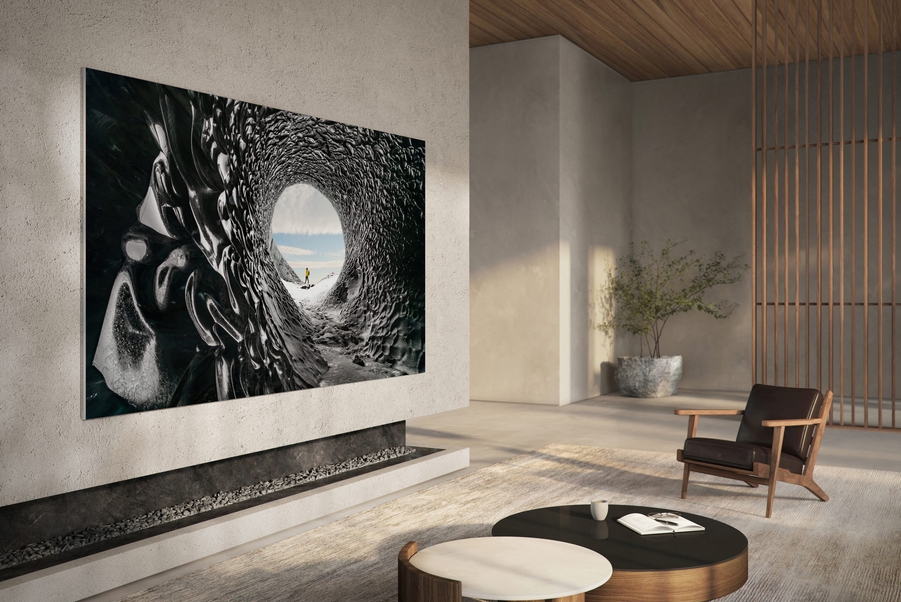
Video walls aren't just for sports bars and corporate lobbies anymore. What started as a commercial display technology has found a home in residential spaces for media rooms, home theaters, dedicated game rooms, and large entertaining areas, where a standard TV simply can't do the job. If you've ever wondered what goes into one of these systems and whether it might be right for your home, here's what you need to know.
SEE ALSO: 3 Features Any Epic Home Entertainment System Should Have
What Makes a Video Wall Different
A video wall isn't just a giant screen; it's a system of multiple displays configured to work together as a single, unified canvas. That distinction matters because it opens up a wealth of possibilities. You can scale the image well beyond what any standard flat panel offers, display multiple content sources simultaneously, and perhaps most importantly, customize the dimensions to fit the wall and the room rather than the other way around.
For homeowners, the most common applications are dedicated home theaters, sports and game rooms, great room feature walls, and indoor bars or entertaining spaces. Any setting where the display is the centerpiece of the room, where you want people to walk in and immediately notice it, is worth considering.
Video Wall Technology
There are three main technologies in play right now, each with real differences in how they look, what they cost, and where they work best.
Tiled LCD and OLED panels are arrays of commercial-grade displays arranged in a grid. The technology is mature, image quality is excellent, and the entry price is lower than the alternatives. Modern panels have very thin bezels, though the seams between screens are still visible up close. These work best in rooms where lighting can be well-controlled.
Direct View LED is where most of the excitement is. Instead of tiling separate screens, dvLED uses modular panels of individual LEDs to create a single, seamless surface. With no bezels or seams, it just looks like a single continuous image. It performs well in any lighting condition, scales to virtually any size, and handles multiple content sources without breaking a sweat. The cost is higher, but it's become the go-to choice for serious residential installations.
MicroLED sits at the top of the range. The LEDs are microscopic, which means pixel density climbs dramatically and contrast and color accuracy reach a level that's hard to describe until you've seen it in person. It's where the technology is heading, and it's already available for homeowners who want the best and aren’t cost-sensitive.
What to Think About Before Deciding
Viewing distance matters more than most people expect. Sit too close to the wrong configuration, and you'll see individual pixels instead of a picture. Room depth is one of the first things to sort out before anything else.
Lighting is the other big one. A bright, window-filled room behaves very differently from a dedicated theater with controlled light. Some technologies handle ambient light far better than others, and getting that match wrong is an expensive mistake.
Think about how you'll actually use it. Watching movies calls for different specs than splitting the screen across four live sports feeds. The way you use the display should drive the configuration, not the other way around.
Finally, consider how it connects to the rest of the home. A video wall that integrates with your control system, audio setup, and lighting scenes performs completely differently than one that sits in isolation. That integration is where the experience either comes together or falls short.
Why Professional Design and Installation Matters
A video wall is a system, not a purchase. The display itself is one piece of it. Source management, signal processing, calibration, and integration with audio, lighting, and control all determine how it actually performs day to day. On a screen this size, poor design and installation will be plain to see.
Custom Home Sound designs and specifies video wall solutions tailored to the room and how it's used, and we handle everything from installation to smart home integration. The goal is a display that looks as good as it should and works every time you walk in the room.
Ready to explore what a video wall could look like in your home? Contact Custom Home Sound to start the conversation.